
Trinity Western University’s Department of Biology is celebrating a major achievement by Professor David R. Clements, who has been elected to fellowship by the Canadian Weed Science Society (CWSS-SCM). This honour recognizes Dr. Clements’ decades-long contributions to weed science that has influenced agricultural practices and ecological restoration across the globe.
Clements, who joined TWU in 1994, has built an international reputation as a leading voice in weed science. With more than 100 peer-reviewed publications and two award-winning books—Global Plant Invasions and Persistence Strategies of Weeds—Clements has helped shape the scientific understanding of plant invasions worldwide.

From insects to weeds—a lifelong journey begins
As a young boy, David spent endless summer days with a butterfly net catching insects. At university, he naturally had his mind set on entomology—so much so that he completed a PhD going that route. However, through an interesting academic journey that began with working one summer for his undergraduate thesis supervisor, the late Dr. Paul Cavers (who became a lifelong peer and mentor) and led to a three-year postdoc with Dr. Clarence Swanton, who “made the case for weed science because weed pests cost way more to society than insect pests,” David switched his focus to weed science and hasn’t looked back.
“I still get to study insects here and there,” he adds with excitement, explaining, “My research is still diversifying.” Referring to his TWU students and their research, Clements says, “I’ve had a lot of students studying insects on knotweed lately.” So, the childhood fascination was never completely abandoned.
Although weed science might seem to the everyday person an isolated specialization, the opposite couldn’t be more true for Clements. Through the CWSS meetings and research partnerships, Clements has found a community of fun-loving scientists who look forward to getting together year after year. “Going to these scientific meetings is not dry—it’s always lots of fun,” says Clements, jovially adding, “It’s your weed science family.” He describes using these opportunities to impact his fellow weed scientists, expressing his joy and love for others through “the light that God has put in [him].”
Rooted in faith
Clements describes how he integrates his Christian faith with his research at TWU by encouraging students in Creation stewardship. “Weeds are part of what’s wrong with how we’ve looked after Creation. We’re the ones that have moved plants around and manipulate ecosystems to make them vulnerable to weeds—these huge weed problems are often our fault,” he explains.
While Clements’ work has taken him to research sites in Asia, Australia, and the Pacific Islands, his commitment to British Columbia’s ecosystems remains central. He oversees TWU’s three ecological research sites, including the Crow’s Nest Ecological Research Area on Salt Spring Island, where he and his students have conducted restoration research on Garry oak ecosystems for over two decades.
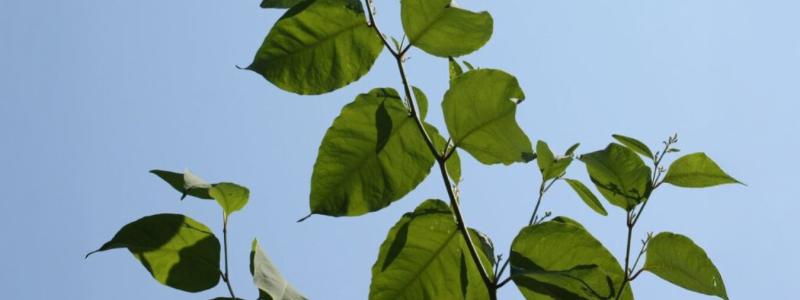
Clements’ research has also addressed pressing local challenges, notably the spread of invasive knotweed species in B.C. Knotweed, a highly aggressive plant, has been a focal point for Clements’ lab since 2015. Following B.C.’s historic 2021 flood, Clements and his students documented a five-fold increase in knotweed populations along a major salmon stream. This finding underscored the urgent need for integrated management strategies.
To meet this challenge, in collaboration with TWU faculty colleagues, Joshua Hale and Kelly Arbeau, Clements established The Knotweed Lab at TWU, a research and outreach initiative that combines rigorous science with community engagement. The lab has organized public education campaigns, knotweed walks, and partnerships with organizations such as the Fraser Valley Invasive Species Society.

Impact across the globe
Clements has worked with scientists in China, Japan, Malaysia, and Australia on innovative strategies for invasive species control. His research on Mikania micrantha (“mile‑a‑minute weed”) led to successful crop‑competition approaches—such as using sweet potato—and produced 31 peer‑reviewed papers with practical benefits for farmers across Asia.
He also contributes significantly to scientific publishing, co‑editing the Biology of Invasive Plants series and previously leading a 16‑year editorial project on Pacific Island invasive species. His editorial leadership continues to shape global understanding of plant invasion biology and management.
A distinguished career
The CWSS Fellowship adds to an impressive list of honours, including the Canadian Weed Science Society Excellence in Weed Science Award (2014) and two consecutive Best Book in Weed Science Awards from the Indian Society of Weed Science (2022, 2024). In 2023, Clements was named a Fellow of the American Scientific Affiliation, reflecting his commitment to integrating science and faith in addressing ecological challenges.
Shaping the next generation of scientists
At TWU, Dr. Clements has inspired generations of students through courses such as Plant Ecology and Tropical Botany, as well as field-based learning in B.C. and Hawaii. He has supervised numerous graduate and undergraduate research projects, fostering a new wave of scientists equipped to tackle a variety of local and global weed-related issues.
About Trinity Western University
Founded in 1962, Trinity Western University is a global Christian liberal arts university dedicated to equipping students for life. Uniting faith and reason through Christian teaching and scholarship, TWU is a research institution offering undergraduate and graduate degrees in the humanities and sciences as well as in several professional schools. TWU has its main campus in Langley, B.C. and campus sites in Richmond, B.C. and Ottawa, Ont. Learn more at www.twu.ca or follow us on Instagram @trinitywestern, Twitter @TrinityWestern, on Facebook and LinkedIn. For media inquiries, please contact media@twu.ca.